What to Look for When Hiring a Food Illustrator
A practical guide to hiring a visual artist, from a Richmond-based food illustrator
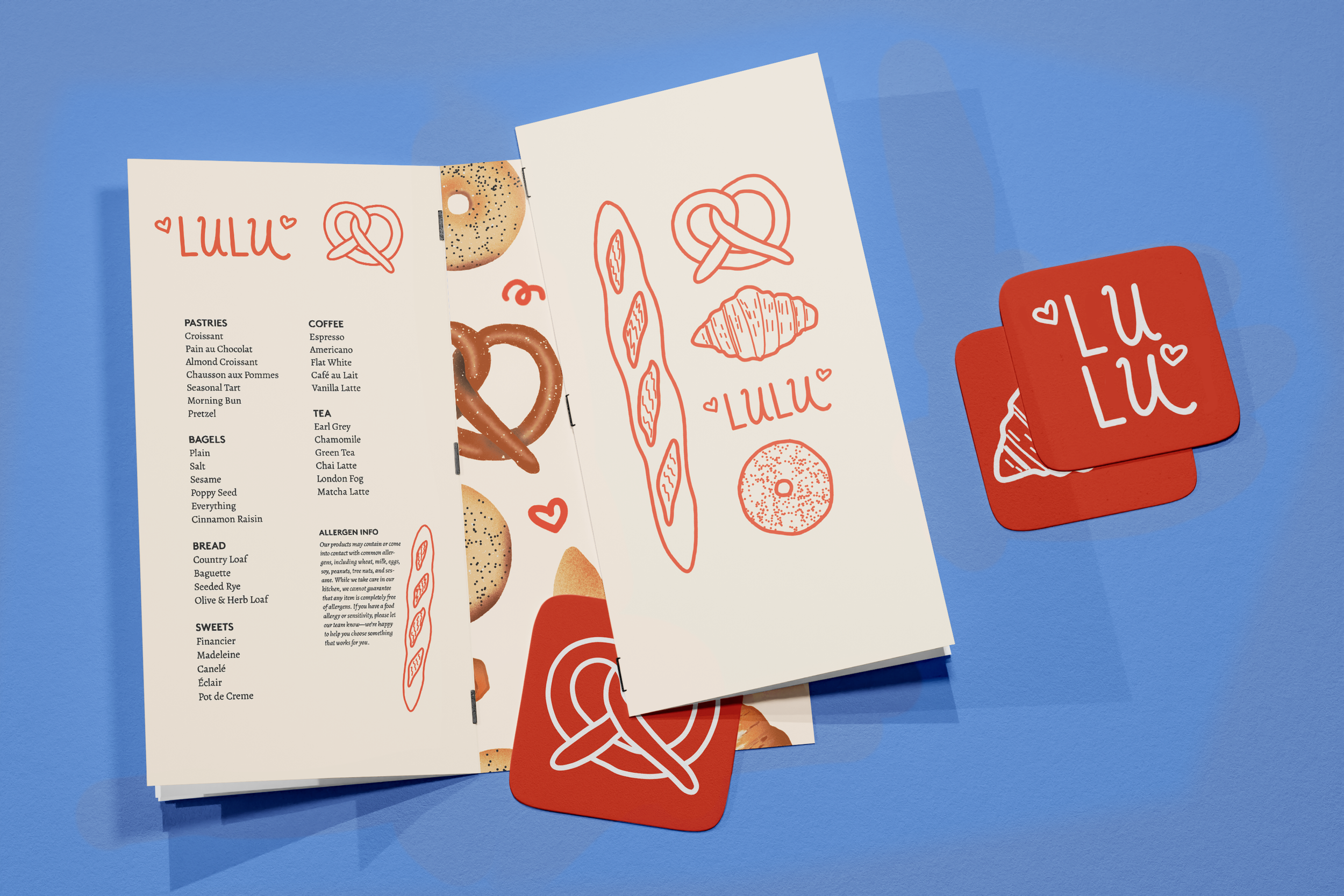
A self-initiated branding concept for a bakery
If you’ve never worked with one before, the process of hiring a food illustrator can feel a little opaque at first. Where do you find the right person? How do you know if their style is a good fit, or if they’re professional to work with? What should it cost, and how long will it take?
Luckily, working with a freelance food illustrator is more straightforward than it might seem once you know what to look for. Whether you're a brewery or winery looking for illustrated branding that feels like you, a restaurant owner who wants something more distinctive than stock imagery, or an entrepreneur developing food packaging for a new product, this guide covers what to consider before you reach out — and how to set a project up for success from the start.
Consider Style
Different illustrators have different strengths, and it's worth thinking carefully about what an artist is bringing to the table in terms of style, technique, and background. When you look at their portfolio, does their existing work feel like what you're imagining? Is their style the right fit for your project? A loose, hand-painted watercolor style is very different from work with bold outlines and bright, flat colors. Are you looking for something hyperrealistic? Do you want something that shows the artist's hand? Collect some work you love and ask yourself what the common threads are.
Relevant Experience
Food illustration is a niche just like any other. Look for someone who specializes or has strong relevant work. If you were commissioning someone to illustrate a guide to native plants, you'd want someone with strong botanical work in their portfolio and an understanding of plant anatomy. It's the same for food — someone who knows their subject matter well will create artwork that is accurate, appetizing, and credible to an audience that knows food.

A process sketch from the early stages of an illustrated map project
Process and Communication
A standard process for contracts, invoicing, and deliverables is a green flag. Before work begins, both the client and the artist should have a clear sense of the project's scope and direction — what's being made, what it's for, and what success looks like. There should be a rough schedule with agreed-upon deadlines for sketches, revisions, and final delivery, and practical details like file format and sizing should be discussed upfront. Many illustrators require a deposit before starting work and have a kill fee in place if a project is cancelled mid-process; both are signs of a professional practice.
Licensing and Usage Rights
As the creator, an illustrator owns the copyright to their work the moment they make it. What they're selling you is permission to use that work within agreed-upon terms, like where it appears, for how long, in what region, and whether the use is exclusive to you or not.
For most straightforward projects this isn't complicated, but it does affect your quote. An illustration used on a single restaurant menu is very different from one that appears on 50,000 units of retail packaging, and the pricing will reflect that.
The simplest thing you can do is come to the conversation knowing where the work will live. Print or digital? Packaging, menu, social media, advertising? Local or national? Your illustrator will take it from there.
Budget and Timeline
An illustration project moves through several stages: briefing, research, sketching, client feedback, revisions, and final delivery. For most projects, plan for a minimum of two to four weeks — longer for complex work involving multiple pieces, maps, or pattern collections. Most illustrators will do their best to meet your deadline, so if you have a hard date, be clear about it from the start. And if the final piece is going to print, remember to factor in printing and finishing time, which can add another few weeks.
On budget: custom illustration is an investment, and rates vary widely depending on the illustrator's experience, the complexity of the work, and the licensing scope. Sharing a range you're comfortable with is one of the most helpful things you can do; it allows the illustrator to tell you honestly what's achievable, rather than quoting blind and landing somewhere that sends both of you back to square one. If the numbers don't immediately line up, there's often room to adjust: the number of revisions, the complexity of the composition, and the licensing terms are all areas that can be tweaked to bring a project back into range.
How to Write a Good Brief as a Client
A design brief doesn't need to be complicated; in most cases a simple email summarizing your project is a fine starting point. But it helps to have a clear sense of what you need before you reach out. Here are a few things to think through:
Project context: You may come in knowing you want a menu design, an illustration for a check presenter, and a social media template. Or you may be starting a new brand and feeling a little unsure of how an illustrator could be most helpful. Either is okay! But at minimum, consider the basics: What is this for? Who is the audience? What are you trying to accomplish?
Style preferences: This is often an evolving conversation, so it's fine to come in a little unsure of what you want. But give some thought to what you like (or dislike!) and why. Collect examples of work you're drawn to, not to copy, but to provide context and direction. Which pieces in the illustrator's existing portfolio do you respond to most?
Deliverables: File formats, sizes, and how many pieces you need.
Usage: Where the work will appear and for how long.
Timeline: When do you need it? Do you need to account for internal approvals or printing and finishing time?
Budget range: Most illustrators want to make your budget work! The clearer your answers to the above, the more accurate your quote will be.
In Conclusion
Finding the right food illustrator comes down to a few things: a style that fits your vision, relevant experience in the food and beverage space, a clear and professional process, and an open conversation about budget, timeline, and usage. A great piece of food illustration gives your brand artwork that's built for you, that can work across everything from packaging and menus to editorial spreads and beyond.
If you're working on a food or beverage project and want to talk through whether we might be a good fit, let’s chat! Send me an email to get started.
FAQ
-
I work as both an illustrator and designer, so for many projects I can take the work from concept through to final files without you needing to coordinate between multiple people. If your project has needs outside that scope I'll always tell you upfront.
-
Custom illustration is original, ownable, and built around your specific brand. AI-generated images often look similar across brands, can't be reliably reproduced or modified, and carry unresolved questions around copyright. A commissioned illustration is yours. (And it will look better.)
-
Every project is different, so there's no single answer — but the main factors are the complexity of the work, how many pieces you need, and how the illustration will be used (a single social media graphic is priced very differently from packaging going into national retail). The best way to get an accurate number is to reach out with your project details. I'm always happy to give you a clear quote before anything begins.
-
For most projects, plan for two to four weeks from brief to final delivery. More complex work, like multiple pieces, detailed compositions, or pattern collections, will take longer. If you have a specific deadline, share it early and I'll let you know what's realistic. Rush timelines are sometimes possible, but they do affect pricing.
-
You don't need everything figured out — that's what the briefing process is for. It helps to have a rough sense of what the project is for, where the illustration will be used, and any visual references you love. Even a loose Pinterest board or a few examples of styles you're drawn to is a great starting point.
-
Yes! If you share your brand guidelines, color palette, and any existing assets, I'll make sure the illustration feels like a natural extension of what you've already built.
-
Yes! I love working with small, independent food businesses. If you're not sure whether your budget fits, just ask — it's always worth a conversation.
Have a project in mind and want to talk it through? Send me an email to get started.